




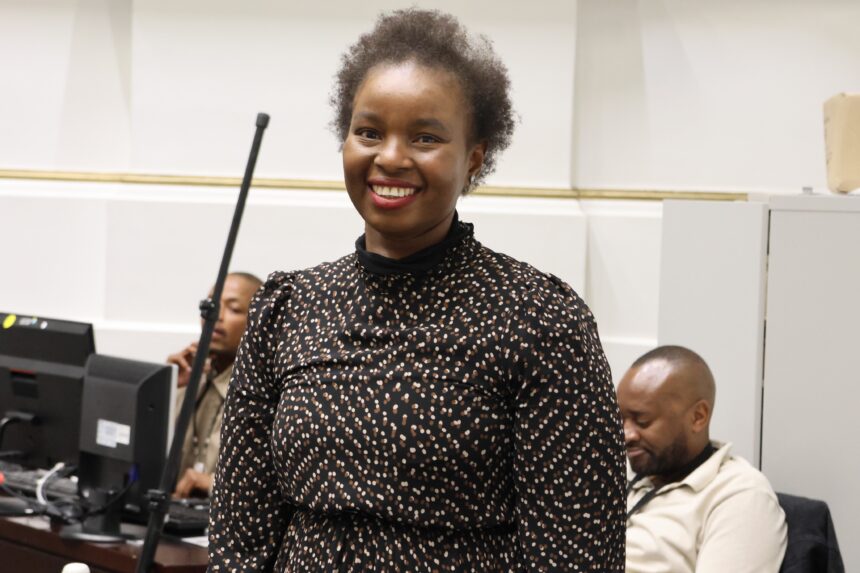
Senamile Masango, South Africa’s first Black female nuclear scientist, has passed away at the age of 37 following a short illness. Masango was widely recognized for her groundbreaking work in nuclear science and for inspiring young women to pursue careers in science and technology.
Masango, who was a board member of the Nuclear Energy Corporation of South Africa (NECSA), made significant contributions to the field, both in South Africa and internationally. She was the first African woman to join an African-led team conducting experiments at the European Organisation for Nuclear Research (CERN). Her achievements also earned her a place on the Mail & Guardian’s 200 Young South Africans in Science and Technology list.
The Chairperson of the Human Resource Development Council (HRDC), Deputy President Shipokosa @PMashatile, has received with sadness news of the passing of a Member of the HRDC, South Africa's first black nuclear scientist, Ms. Senamile Masango. https://t.co/3AQ6G3ZEuY pic.twitter.com/KlvDzbvdg9
— The Presidency 🇿🇦 (@PresidencyZA) February 10, 2025Born in 1987 in Nongoma, KwaZulu-Natal, Masango’s interest in science began at a young age. Despite facing personal and professional challenges, including the tragic loss of her daughter and racial discrimination in a male-dominated field, Masango continued to break barriers. She was passionate about promoting science education and empowering young women, founding the Senamile Masango Foundation to support these causes.
To President Cyril Ramaphosa, King Misuzulu of the Zulu Nation, the Masango family, and the Nongoma community,
It is with profound sadness that we mourn the passing of Senamile Masango, a trailblazing nuclear scientist who left an indelible mark on South Africa's scientific… pic.twitter.com/crt9U1jVHE
— DEPARTMENT OF SCIENCE,TECHNOLOGY & INNOVATION (@dstigovza) February 9, 2025Masango’s dedication to her work was widely recognized, including receiving the International Women in Science Award in 2022. She is remembered as a role model who pushed the boundaries of science while advocating for greater inclusivity and representation of women, especially in nuclear science.


