




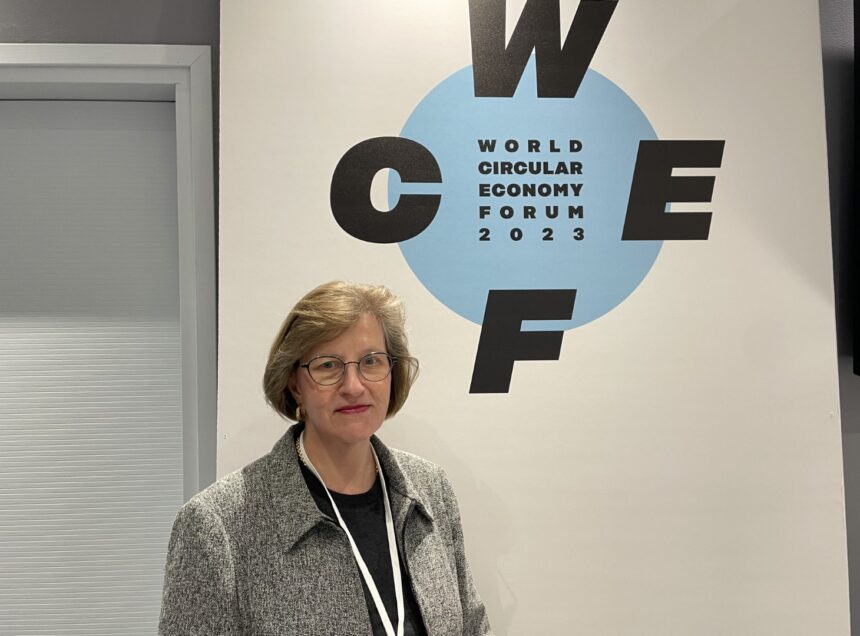
HELSINKI (Finland), 7th June, 2023 – In the Gulf region, the UAE boasts the most advanced circular economy infrastructure, providing numerous exciting prospects for bilateral collaboration with Finland, according to a senior Finnish diplomat. Anne Vasara, the Ambassador for Circular Economy and Energy at the Department of International Trade in the Finnish Ministry for Foreign Affairs, spoke to the Emirates News Agency (WAM), highlighting the shared vision between Finland and the UAE in developing a more sustainable future.
Vasara expressed optimism regarding the potential for increased collaboration between the two nations in areas such as waste management, waste-to-energy, waste-to-fuel projects, and the digitalization of the circular economy sector. She emphasized the significance of a circular economy, which aims to keep materials, products, and services in circulation for as long as possible through practices such as sharing, leasing, reusing, repairing, refurbishing, and recycling, ultimately minimizing waste.
Regarding the UAE’s well-established circular economy infrastructure, Vasara noted that the Emirate already surpasses other regional countries in terms of waste recycling rates. She expressed satisfaction with the UAE’s commitment to the green transition and the development of its circular economy model, including numerous planned circular economy projects. Vasara described these developments as opening up intriguing cooperation opportunities, with growing prospects in material recycling and reuse as the circular economy sector expands into new domains.
Ambassador Vasara made these statements during a media tour in Helsinki organized by the Finnish Ministry for Foreign Affairs. The tour, named “Climate Solutions from Finland,” brought together senior journalists from nine media outlets, including WAM, from various countries worldwide.
Vasara also highlighted the vital role the UAE will play as the host of COP28, the UN Climate Conference, scheduled to be held in Dubai at the end of this year. She stressed the need for a significant acceleration in the global transition to a circular economy to combat climate change, address biodiversity loss, and reduce over-consumption of natural resources.
Finland has been at the forefront of circular economy initiatives since the inception of its first national circular economy roadmap in 2016, Vasara stated. The country’s strength lies in eco-innovations, sustainable solutions, and energy-efficient technologies, making it one of the leading circular economy nations in Europe. Finland continues to heavily invest in clean technologies, sustainable bio-economy, and circular economy practices.
The Finnish Plastics Road Map, published in 2018, has positioned Finland as a pioneer in combating the plastics challenge, Vasara explained. The roadmap has fostered collaboration between stakeholders from the public and private sectors as well as academia, creating a network encompassing all stages and actors involved in the plastic life cycle. This collaboration facilitates innovative approaches and provides a framework to address the issue. While EU legislation plays a crucial role, Finland has also introduced voluntary measures through green deal agreements.
Vasara acknowledged the challenges faced by highly developed societies, where consumption patterns still favor single-use plastics and plastic recycling needs improvement. However, she highlighted the progress and innovation taking place in Finland, with a growing number of Finnish companies developing alternatives to plastics, such as cellulose-based bioplastics and composites. Finnish companies also offer solutions and technologies for international markets, including various stages of the plastic life cycle and different methods of collecting and recycling plastics. Vasara emphasized the importance of sustainable alternatives in packaging and the construction sector.


, 7th June, 2023 - In the Gulf region, the UAE boasts the most advanced circular economy infrastructure, providing numerous exciting prospects for bilateral collaboration with Finland, according to a senior Finnish diplomat.)