




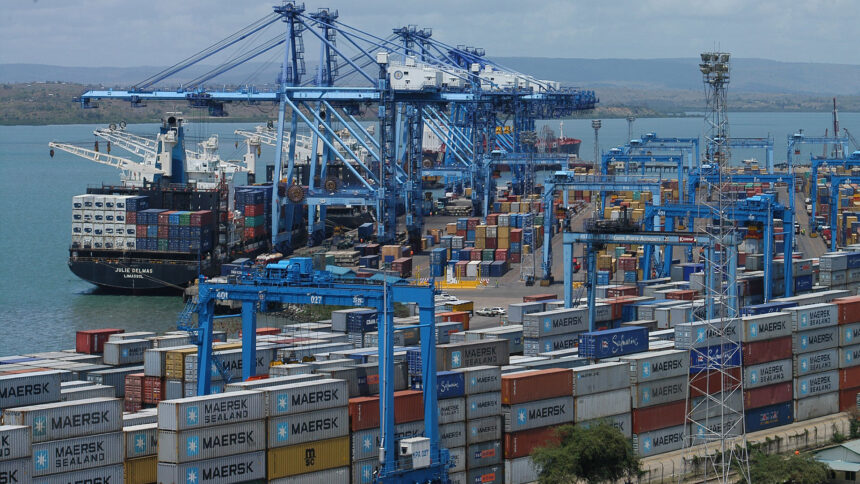
Mombasa port in Kenya is experiencing a surge in cargo volume, capitalizing on improved efficiency and faster turnaround times compared to regional competitors struggling with congestion.
The Kenya Ports Authority’s (KPA) focus on streamlining operations has paid off, with the first half of 2024 witnessing an 18.2% increase in transit cargo compared to the same period last year. This growth comes despite a slower increase from Uganda, traditionally Mombasa’s largest transit market.
Rwanda and Burundi, however, have significantly shifted their cargo flows towards Mombasa. Rwanda nearly doubled its volume, while Burundi saw a staggering 320% increase. This shift is attributed to Mombasa’s superior efficiency. In May 2024, ships waited an average of just 1.22 days to dock in Mombasa, compared to a staggering 25 days in Dar es Salaam.
KPA’s investments in new equipment, including modern cranes that can handle two containers simultaneously, have significantly boosted productivity. Additionally, the implementation of a Fixed Berth Window system ensures a more predictable schedule for cargo offloading.
These improvements haven’t gone unnoticed. South Sudan and the Democratic Republic of Congo (DRC) have also increased their cargo volumes via Mombasa, citing its ideal location and efficient operations. Kenya is further aiming to attract new customers from Ethiopia and Zambia, both traditionally reliant on congested ports.
“The acquisition of new equipment has been a game changer for Mombasa port,” said KPA Managing Director Captain William Ruto. “We have also seen a positive impact from reforms implemented to reduce the cost of doing business at the port.”
The reforms, initiated by the Kenyan government, include extended free periods for returning empty containers and a round-the-clock work culture to expedite cargo clearance. These efforts have significantly improved cargo dwell time and ship turnaround times.
Justus Nyarandi, Executive Secretary of the Northern Corridor Transit Transport Coordination Authority (NCTTCA), believes Mombasa has the potential to attract up to 40% of cargo volumes from Burundi and Rwanda. However, further infrastructure development, including geofencing a key road section, is needed to facilitate electronic cargo monitoring.


