


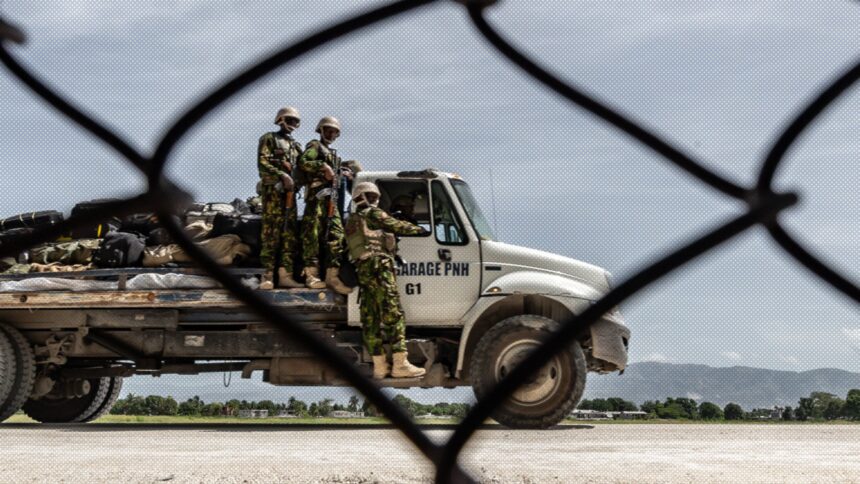
Port-au-Prince, Haiti – A glimmer of hope flickered in Haiti’s capital this week as the first contingent of Kenyan police officers arrived. This deployment marks the long-awaited start of a UN-sanctioned mission aimed at curbing the rampant violence perpetrated by armed gangs.
Residents, however, remain cautiously optimistic. Jean-Louis Pierre, a Port-au-Prince resident, expressed his hope while voicing concerns about the mission’s longevity. “The country can improve now that the forces are here, but they need to stay for a significant amount of time. A few months or a year won’t be enough to solve this problem,” Pierre cautioned.
The initial deployment consists of a few hundred Kenyan officers, with the total force expected to surpass 2,500. However, the arrival date for the remaining contingent remains shrouded in uncertainty. Additionally, the mission’s initial 12-month mandate expiring in October raises concerns about long-term sustainability.
Haiti’s request for international assistance came in 2022. Since then, the situation has deteriorated dramatically. Gangs have formed a powerful alliance, seizing control of vast swaths of the capital. Their reign of terror includes indiscriminate killings, mass kidnappings, sexual violence, and crippling restrictions on movement of both people and goods.
While some semblance of normalcy has slowly returned in recent weeks, the humanitarian crisis remains dire. The UN estimates that five million Haitians are struggling with food insecurity, and over half a million are internally displaced.
New Prime Minister Garry Conille has vowed to reclaim control, stating his intention to “re-take the country house by house.” However, a video circulating on social media throws a wrench into these plans. The video, believed to be authentic, shows gang leader Jimmy “Barbecue” Cherizier rallying his followers. Cherizier, known as a spokesperson for the gang alliance, threatens the Kenyan forces and views all foreigners as invaders.
The video adds another layer of complexity to the situation. Aid groups fear civilian casualties in the coming conflict, with the UN estimating that nearly half of gang recruits are children. Student Venart Simeone offered a poignant perspective, stating, “Most young men are armed now. They depend on those weapons for survival. I wouldn’t want to be in their place, and I pray I never will be. What this country needs is jobs, so young people can have a decent life.”