

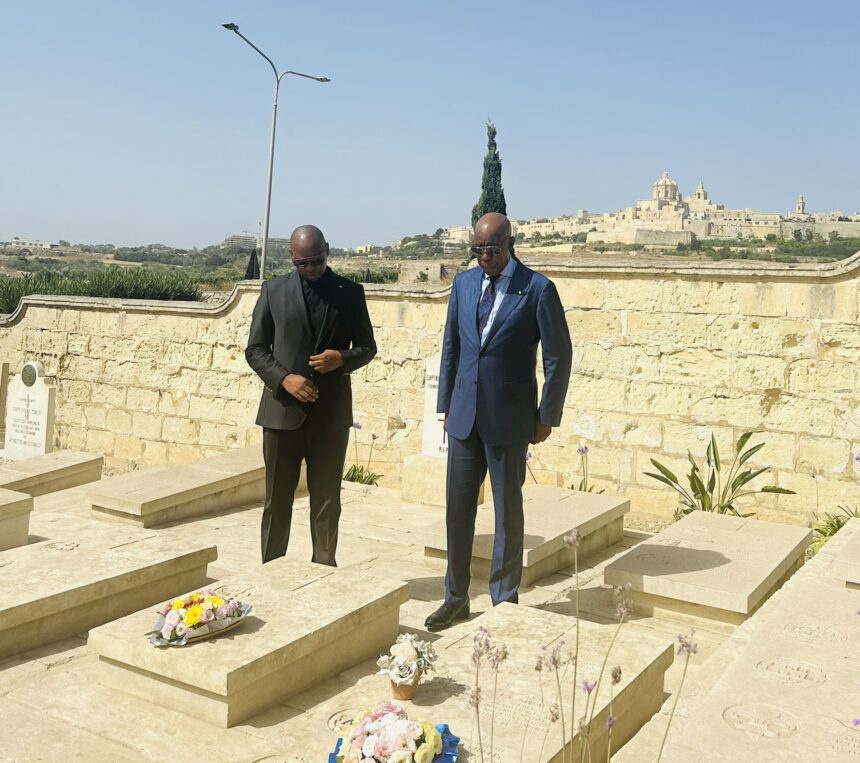
Attard, Malta – Lejone Mpotjoane, Lesotho’s Foreign Minister, and Joshua Setipa, Lesotho’s candidate for Commonwealth Secretary-General, recently paid a visit to Malta. While discussions focused on strengthening the Commonwealth, a significant portion of the trip was dedicated to honoring a forgotten chapter in Maltese history: the contribution of Basotho soldiers during World War II.
Setipa, a former Trade and Industry Minister, laid wreaths at the Imtarfa Military Cemetery, where Basotho servicemen who died fighting for the Allied cause are buried. “Hundreds of Basotho paid the highest price for the liberation of Europe,” Setipa said in a tweet, highlighting the sacrifice of these men far from home.
The Basotho soldiers, referred to as “Basuto Coys” (companies) of the African Auxiliary Pioneer Corps (AAPC), were brought to Malta to assist with manual labor. Tasks like unloading supplies, building runways, and clearing debris formed their primary duties. However, their story goes beyond manual labor. Many Basotho soldiers trained with weapons and participated in military exercises.
Despite their contributions, the Basotho people’s role in Malta’s wartime efforts has largely been overlooked. Their legacy is often reduced to a derogatory term used by some Maltese people. This visit by Lesotho’s officials aims to raise awareness of this forgotten chapter and ensure the Basotho soldiers are properly recognized.
Further research reveals a complex narrative. The colonial perception of the Basotho was often skewed, with their name even being mispronounced and misspelled. Additionally, a tragic event befell some Basotho troops. A ship carrying Basotho soldiers was sunk off the coast of Benghazi, resulting in the deaths of over 600 men.
While some Basotho soldiers primarily performed manual labor in Malta, others participated in military training and even sang, leaving a lasting impression on some locals.