




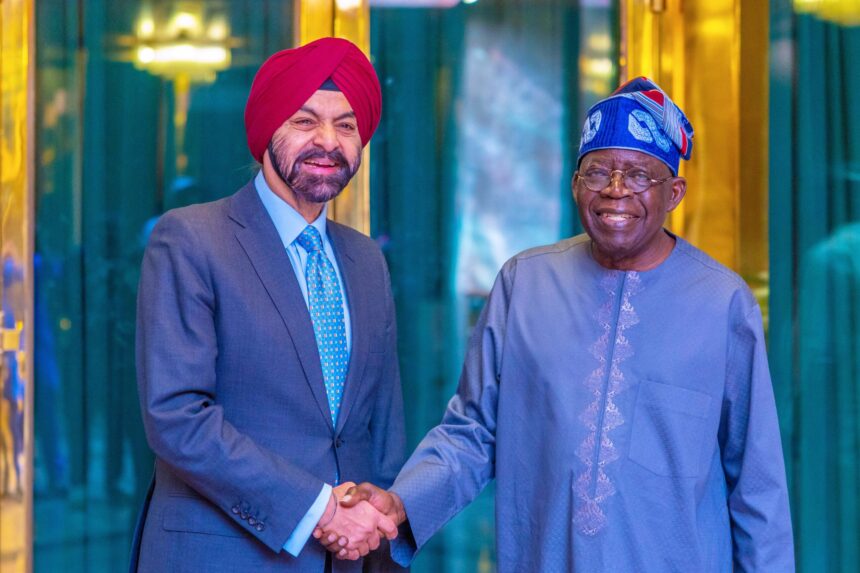
ABUJA, Nigeria – The World Bank announced a $2.25 billion loan package on Thursday. This financial boost aims to stabilize the nation’s economy and bolster efforts to alleviate poverty.
The approval comes after Nigeria’s Finance Minister, Wale Edun, expressed the country’s need for such assistance in April. Edun anticipated the World Bank’s board to approve the request by June, and his prediction proved accurate.
President Bola Tinubu initiated a series of economic reforms in May 2023, considered the most ambitious in recent decades. These reforms included the removal of the heavily-subsidized fuel program and a dual devaluation of the Nigerian currency. While intended to stimulate economic growth, these actions also triggered a rise in inflation and exacerbated the cost-of-living crisis. The International Monetary Fund (IMF) projected that fuel subsidy costs could reach 3% of GDP in 2024 due to the devaluation, as fuel price hikes haven’t kept pace with the dollar’s rising value. Labor unions have also pressured the government to reverse these reforms.
The World Bank’s loan package is divided into two parts. A $1.5 billion portion will directly support Nigeria’s ongoing economic reforms, while the remaining $750 million aims to accelerate revenue generation for the nation.
The World Bank acknowledged Nigeria’s commitment to tackling economic imbalances and strengthening its fiscal health. They commended the country for taking “initial critical steps” to restore macroeconomic stability, boost revenue collection, and create an environment conducive to both economic growth and poverty reduction.
The loan is expected to assist Nigeria’s efforts to increase non-oil revenue streams and achieve greater fiscal sustainability. This, in turn, will empower the West African nation to deliver essential public services to its citizens, according to the World Bank’s statement.


