




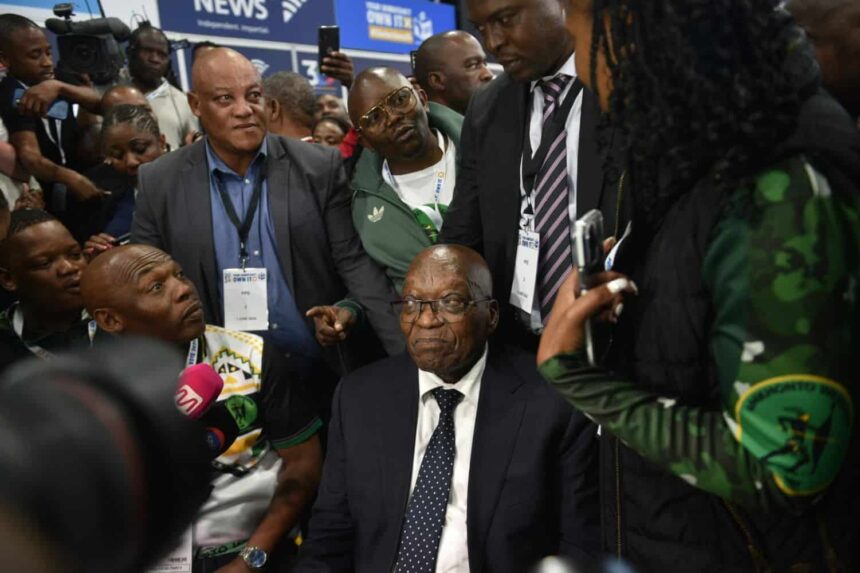
JOHANNESBURG, June 2 – South Africa faces a historic political shift as official election results, expected on Sunday, confirm the African National Congress (ANC) has lost its 30-year majority rule. Voter dissatisfaction with joblessness, inequality, and power shortages reduced support for the ANC, founded by Nelson Mandela, to 40% in Wednesday’s election, a significant drop from the 57.5% it secured in 2019.
The ANC’s loss necessitates the formation of a coalition government, likely involving a major political rival, a first since the end of apartheid in 1994. Political parties have two weeks from the announcement to negotiate a coalition before the new parliament convenes to elect a president, who is still expected to be from the ANC as the largest party.
Fikile Mbalula, ANC’s secretary general, stated at a Sunday press briefing that the party is committed to forming a stable government that mirrors the electorate’s will. He emphasized internal and external discussions to establish national and provincial governments capable of advancing the country. However, Mbalula firmly rejected any coalition conditions demanding the resignation of incumbent President Cyril Ramaphosa.
“The ANC will not entertain any demands for President Ramaphosa to step down,” Mbalula declared.
The ANC’s weakened performance has sparked speculation about Ramaphosa’s political future, either due to coalition negotiations or potential internal challenges. Nearly all votes from the May 29 poll had been counted by Sunday morning, showing a significant decline from the ANC’s previous landslide victories since 1994. The party’s support has eroded over the past decade amid economic stagnation, rising unemployment, and deteriorating infrastructure.
The Democratic Alliance (DA), the main opposition, garnered 21.8% of the vote, while uMkhonto we Sizwe (MK), a new party led by former President Jacob Zuma, took 14.6%, significantly impacting the ANC’s share. The far-left Economic Freedom Fighters (EFF), led by ex-ANC youth leader Julius Malema, received 9.5%.
Both the DA and the smaller Inkatha Freedom Party (IFP) planned leadership meetings on Sunday to strategize their next moves. DA spokesperson Charity McCord said the party would decide on their course of action once the final results were certified, but no coalition talks had commenced yet.
The ANC leadership is scheduled to meet on Tuesday to deliberate on the party’s future actions. Despite outperforming expectations, MK indicated it might legally challenge the election results.
As South Africa awaits the official results and subsequent coalition negotiations, the political landscape is set for significant changes, reflecting the electorate’s demand for better governance and solutions to pressing national issues.


 has lost its 30-year majority rule. Voter dissatisfaction with joblessness, inequality, and power shortages reduced support for the ANC, founded by Nelson Mandela, to 40% in Wednesday's election, a significant drop from the 57.5% it secured in 2019.)