


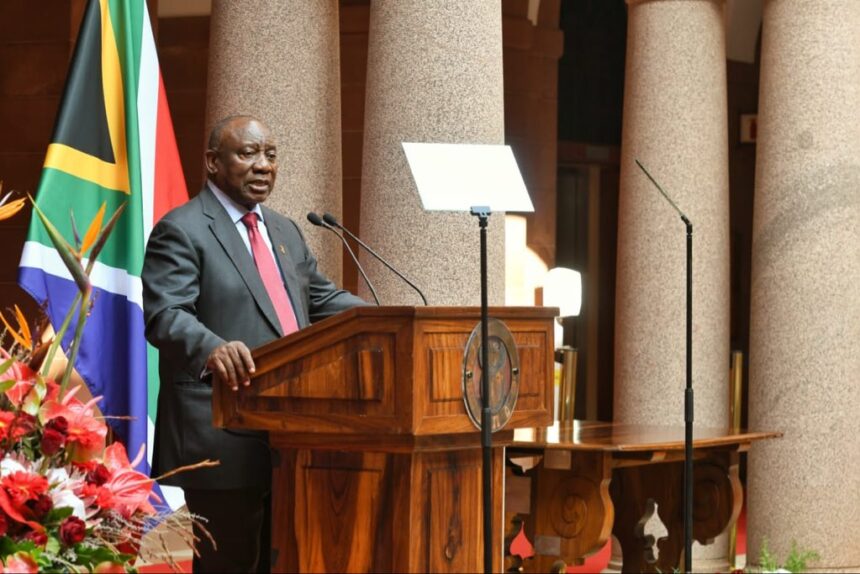
Pretoria, South Africa – President Cyril Ramaphosa has signed the National Health Insurance (NHI) Bill into law, marking a historic moment for South Africa’s healthcare system. This legislation, a key campaign promise for Ramaphosa, ushers in a new era of universal healthcare access for all citizens.
The President, at a signing ceremony on Wednesday, defended the bill against its critics. He argued that opponents advocating for the status quo are out of step with the global trend towards universal healthcare. Ramaphosa emphasized the NHI’s aim to create a unified system, bridging the gap between the underfunded public sector serving the majority and the well-resourced private sector catering to a select few.
Despite widespread support for the idea of universal healthcare, the NHI bill has faced strong opposition. Healthcare professionals, businesses, unions, and legal experts have raised concerns about the bill’s approach of dismantling private health funding. Additionally, uncertainties regarding funding mechanisms, service coverage, and overall implementation have caused apprehension. Public anxieties about government inefficiency and corruption, often associated with state-run entities, have further fueled anxieties around the NHI Fund, a central component of the reform.
Legal challenges to the NHI bill have been anticipated for some time, and these are likely to wind their way through the court system, potentially reaching the Constitutional Court. Industry experts, like Discovery Health CEO Adrian Gore, predict a “multi-decade” implementation process, indicating a gradual rollout rather than immediate changes.
Health Minister Joe Phaahla reassured the public that the NHI won’t be an overnight event. He emphasized a phased implementation with proper regulatory procedures, public consultations, and opportunities for comment. However, he highlighted that initial steps are already underway, with the establishment of the NHI Fund expected within the next year.