


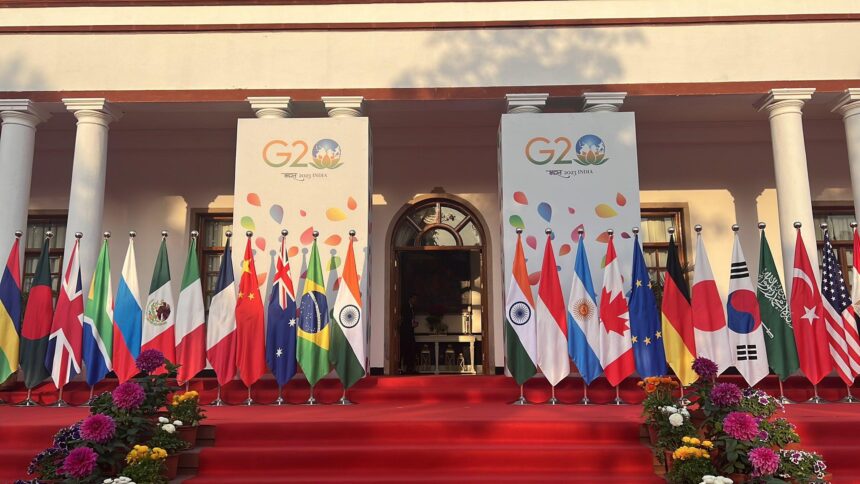
New Delhi, May 19 – China has expressed its opposition to a G20 tourism meeting scheduled to take place next week in the disputed Himalayan territory of Kashmir in India. In a statement issued on Friday, the Chinese Foreign Ministry confirmed that they will not attend the meeting, citing their firm stance against holding any G20 meetings in disputed territories.
India, as the current chair of the G20, has been organizing a series of meetings in various locations across the country in preparation for the main summit scheduled to be held in New Delhi in September.
“China is firmly opposed to holding any kind of G20 meetings in disputed territory, and will not attend such meetings,” stated Wang Wenbin, the spokesperson for the Chinese Foreign Ministry.
The region of Jammu and Kashmir, which was previously a Muslim-majority state, was divided by India in 2019, creating two separate federal territories, Jammu and Kashmir, and Ladakh. A significant portion of Ladakh remains under Chinese control.
Relations between New Delhi and Beijing have been strained since a military clash occurred in Ladakh in 2020, resulting in the loss of 24 Indian soldiers’ lives.
The upcoming meeting of the tourism working group for G20 members, scheduled for May 22-24, is set to be held in Srinagar, the summer capital of Jammu and Kashmir. However, both India and China-ally Pakistan claim the entirety of Kashmir, despite its divided ruling.
Pakistan, also objecting to India’s decision to hold a G20 meeting in Kashmir, has echoed China’s opposition. However, India has responded by asserting its right to hold meetings on its own territory. Indian officials emphasized on Friday that maintaining peace and tranquility along the border is crucial for normalizing ties with China.
The G20 tourism meeting in Kashmir holds significance as it serves as a platform for member countries to discuss strategies and initiatives to boost tourism and foster economic cooperation. However, with China’s opposition and non-participation, the meeting is likely to proceed without their presence.
India remains committed to hosting the G20 summit in New Delhi later this year, where leaders from around the world will gather to discuss critical global issues and forge partnerships for a more prosperous future.
As tensions persist between India and China over territorial disputes, the G20 meeting in Kashmir adds another layer of complexity to the already delicate relationship between the two nuclear-armed neighbors. The coming months will reveal how this situation evolves and whether efforts can be made to alleviate the strain and restore stability in the region.