




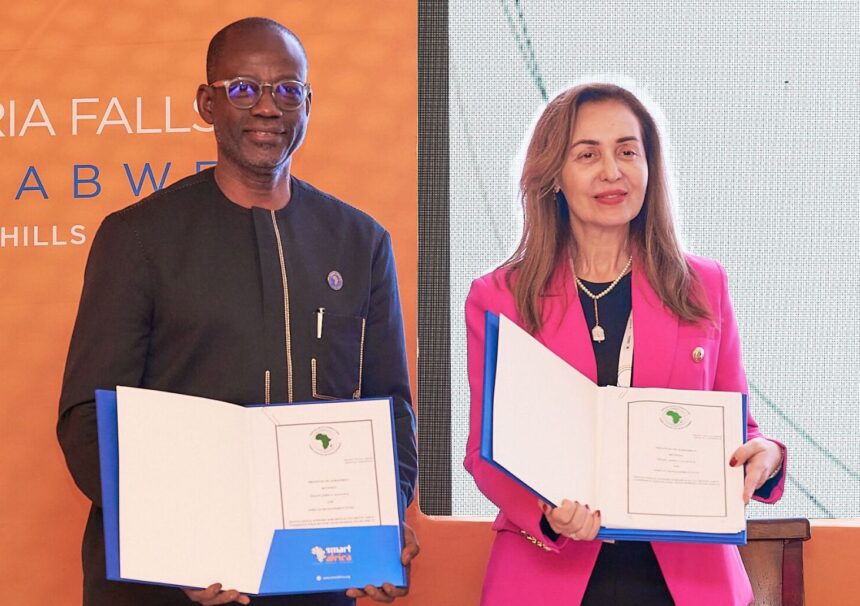
The African Development Bank Group and Smart Africa have announced the launch of a $1.5 million project aimed at enhancing digital trade and e-commerce ecosystems across Africa. The project, which is called the Institutional Support for Digital Payments and e-Commerce Policies for Cross-border Trade (IDECT), is being financed with an ADF-15 Regional Public Good grant, and will be executed by the Smart Africa Secretariat.
The IDECT project is focused on streamlining policies, implementing capacity-building programs, and developing gender-sensitive e-learning training across 10 African countries. The aim is to address key policy gaps and unlock cross-border digital payments, which have the potential to drive the growth of the African e-commerce market and accelerate intra-Africa trade.
The project will invest in identifying gaps in the ecosystem related to cross-border activities, offering practical training and capacity-building programs, and establishing policy dialogue platforms to address identified gaps. The total estimated cost of the project is UA 1.28 million, comprising UA 1.15 million ADF grant financing to Smart Africa Alliance and UA 0.13 million in-kind contribution from SAS. The implementation timeframe is three years, starting from 13 December 2021 and ending on 31 December 2024.
The main development objective of the IDECT project is to strengthen the enabling environment for digital trade across Africa by developing robust and harmonized e-payment ecosystem policies. The specific objectives are to develop a gender-responsive policy framework to facilitate cross-border trade through harmonized e-Payment systems, promote dialogue across e-payments stakeholders to increase public-private participation/projects that enhance the e-payment ecosystem, and support targeted countries to develop action plans to enable e-Payments for the facilitation of inclusive digital trade.
The targeted countries for the IDECT project are Côte d’Ivoire, Benin, Ghana, Liberia, Uganda, South Sudan, Zimbabwe, DRC, Sao Tome and Principe, and Congo. The key stakeholders include the government, regulatory bodies, SMEs (with a focus on women and youth), and private sector operators. The direct beneficiaries of the project will be selected based on transparent selection criteria and publicly accessible online campaign/invitations to join webinar/training workshops.


