

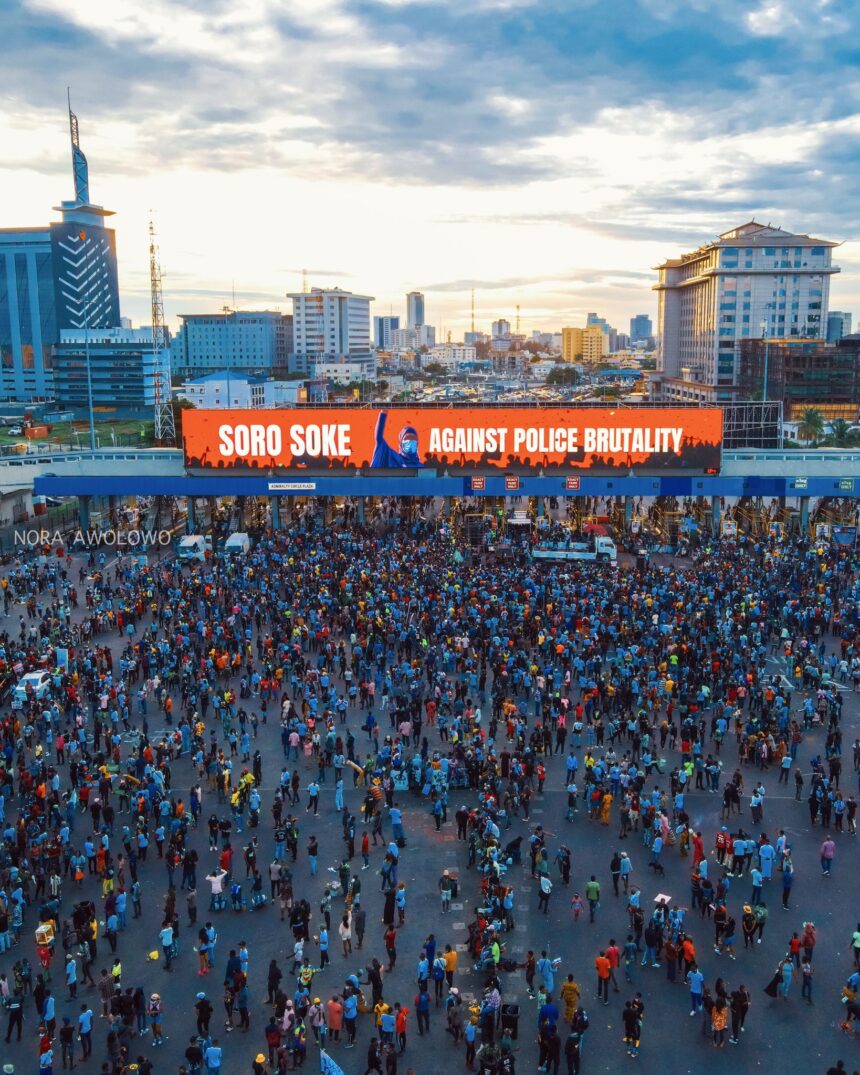
Abuja, Nigeria – The Centre for the Promotion of Private Enterprise (CPPE) has warned that the upcoming hardship protest scheduled for August 1-10 could lead to an estimated daily economic loss of ₦400,000 billion for Nigeria if not properly managed. CPPE Director Muda Yusuf in a statement released on Sunday, noted that the protest poses a serious risk to Nigeria’s already fragile economy.
The CPPE Boss also urged the protest organizers to ensure that their platform is not exploited by individuals with criminal motives who aim to harm innocent citizens, businesses, and public infrastructure. He also advised President Bola Tinubu’s administration to rapidly implement its economic stabilization plan in a bid to ease production costs and ultimately reduce inflationary pressures.
The economist noted that trade costs remain excessively high and must be significantly reduced across the board without compromising domestic production. He pointed out that inflated cargo clearing costs are a major driver of inflation and require immediate attention. Yusuf also emphasized that revenue generation should be managed in a way that avoids placing additional burdens on citizens and businesses.
Furthermore, Yusuf stressed the urgent need for fiscal prudence and transparency at all levels of government. He argued that clear and accurate communication reflecting current economic conditions is crucial for gaining the public’s trust.
“The consequences of such a huge loss for the country and the citizens would be very severe. “There is a high risk of shutdowns and disruptions in major sectors of the economy. These include trade and commerce, manufacturing, entertainment, transportation, logistics, financial services, the hospitality industry, agriculture, aviation, ICT, and construction sectors. This is in addition to risks to the lives and properties of innocent citizens and corporate bodies. The safety of government assets is also at risk.
“We cannot fix a problem by promoting such negative tendencies. Over 90 percent of employed Nigerians are in the informal sector. Employees in this space are dependent on daily income and any disruption to their economic activities beyond 24 hours could snowball into major social unrest. This underlines the country’s vulnerability to prolonged protests”, he stated.