

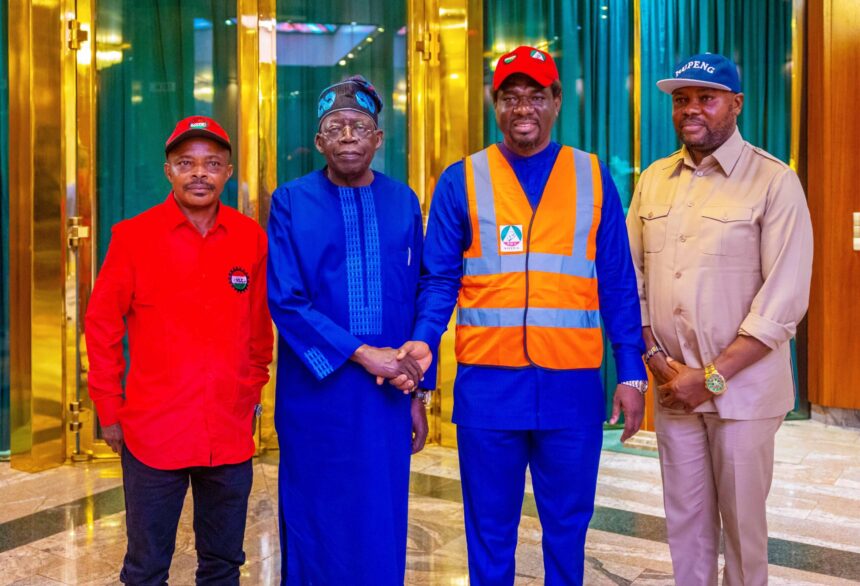
Abuja, Nigeria – July 18th – Nigeria dodged a potential nationwide strike after the government and labour unions reached an agreement on a new minimum wage. The deal, announced yesterday, sets a new floor of 70,000 naira ($44) per month, more than doubling the previous minimum wage of 30,000 naira established in 2019.
This agreement comes amid Nigeria’s worst cost-of-living crisis in a generation. Soaring inflation and a weakening currency have squeezed household budgets, leaving many Nigerians struggling to afford basic necessities. The situation has drawn comparisons to recent protests in Kenya, where economic woes have sparked unrest.
Nigeria’s two largest union federations, the Nigerian Labour Congress (NLC) and the Trade Union Congress (TUC), had threatened strike action to pressure the government for a wage increase. They argued that President Bola Tinubu’s economic reforms, while intended to address long-term issues, were disproportionately impacting workers.
“We have mixed feelings about the new minimum wage,” said NLC President Joe Ajaero. “While it’s a step forward, the economic situation is concerning. We accepted a shorter review period of three years to avoid further delays.”
The deal also includes a commitment from the government to review the minimum wage more frequently than the usual five-year cycle. This concession reflects the unions’ concerns about rapidly rising inflation.
The unions had suspended a strike earlier in June to allow for negotiations, but a lack of progress could have reignited labour unrest. Although a strike has been averted, President Tinubu remains firm on his broader economic reforms, including controversial hikes in electricity and gasoline prices.
To further ease the financial burden on Nigerians, the government plans to invest in infrastructure and renewable energy projects, specifically focusing on compressed natural gas (CNG) plants and buses to potentially lower transportation costs. The president has also requested an additional $4 billion in spending to address budget shortfalls, with a significant portion allocated for recurring expenses.