




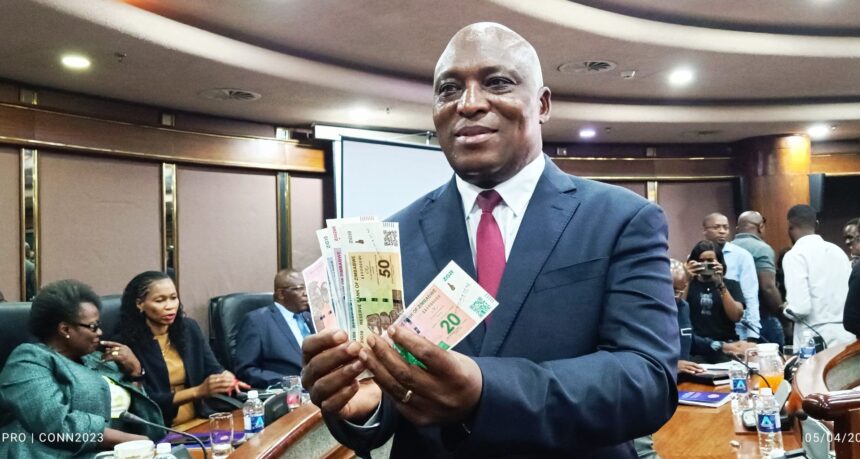
HARARE – Zimbabwe’s central bank governor, John Mushayavanhu, has pledged to uphold the government’s promises in building trust for the recently launched Zimbabwe Gold (ZiG) currency. In an interview with Reuters on Wednesday, Mushayavanhu emphasized maintaining full reserves backing the ZiG as the cornerstone for establishing public confidence.
The ZiG marks Zimbabwe’s sixth attempt at a stable local currency in 15 years, following a period of hyperinflation under former president Robert Mugabe. The previous currency, the Zimdollar, witnessed an alarming 80% depreciation in just three months before its discontinuation. This history creates a significant challenge for authorities, who must now convince a skeptical population to transition away from using foreign currencies.
“Building trust requires us to deliver on our commitments,” Mushayavanhu declared, referencing the central bank’s vow to refrain from printing money to finance government spending, a practice that fueled prior currency collapses. He outlined a plan extending to 2030 that aims to increase ZiG usage while simultaneously bolstering gold and foreign exchange reserves. These reserves stood at $285 million at launch and have since grown to over $380 million.
Currently, the ZiG is used in only about 20% of local transactions, with foreign currencies dominating at 80%. “Our goal is to gradually shift this balance to a 70:30 or 60:40 ratio by year-end,” Mushayavanhu explained. “Ultimately, we envision a scenario where people are indifferent between using the ZiG or foreign currencies.” This gradual approach serves as the roadmap for achieving widespread ZiG adoption.
Despite government claims of rising ZiG usage, reports of currency shortages within shops persist. Mushayavanhu assured the public that sufficient ZiG notes have been printed. Additionally, he suggested the reserve accumulation strategy could accelerate with rising commodity prices. The central bank is actively converting mining royalties into gold, targeting an increase in reserves from the current 2.5 tons to 3 tons by year-end.
Mushayavanhu expressed optimism regarding inflation, projecting a year-end figure of around 5%, a significant improvement over the International Monetary Fund’s estimate of 7%. “For the first time,” he remarked, “our projections are nearly aligned with the IMF’s. Let’s embrace our new currency and work together to make it successful.”


