


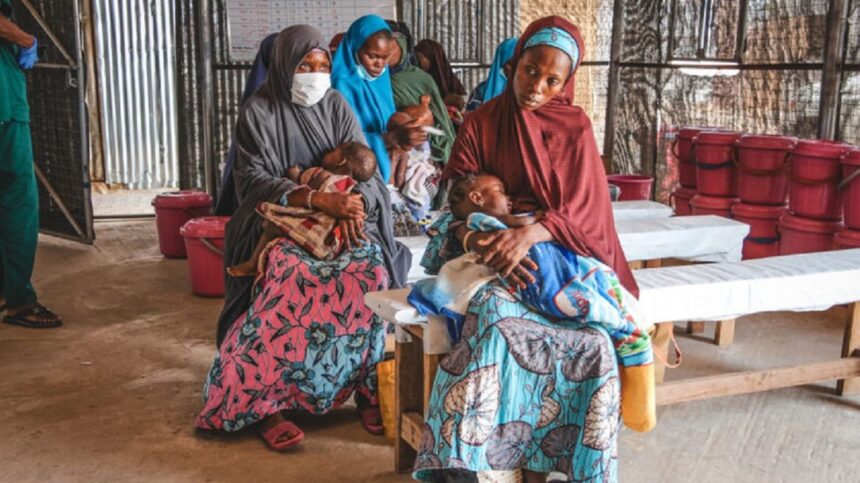
The United Nations is sounding the alarm on a potential food crisis in Nigeria’s war-torn northeast. The UN Office for the Coordination of Humanitarian Affairs (OCHA) is struggling to secure funding for its $306 million appeal to assist 2.8 million people facing severe food insecurity in Borno, Adamawa, and Yobe states.
“We are far from where we want to be,” said UN OCHA chief Mohamed Malick Fall, expressing concern that humanitarian aid for Nigeria is shrinking even beyond the peak season of food scarcity.
Fall fears they may only reach $300 million in funding at best, a significant drop from the $500 million secured last year. He blames the decline on a combination of factors: the economic impact of COVID-19 on major donors and competition for resources from new global crises like those in Gaza, Ukraine, and Sudan.
This funding shortfall comes at a particularly critical time for Nigeria. The country is experiencing its worst cost-of-living crisis in a generation, with inflation exceeding 33% and food prices soaring above 40%.
Without immediate intervention, OCHA warns of “catastrophic” consequences. UNICEF data already shows a staggering number of children suffering – over 120,000 admitted for treatment of severe acute malnutrition in the region, exceeding the entire year’s target.
“The cost of inaction has many folds with the most pressing being an excess mortality among children,” Fall warned.
The UN is urging international donors to step up their support and help avert a full-blown famine in Nigeria’s northeast.