




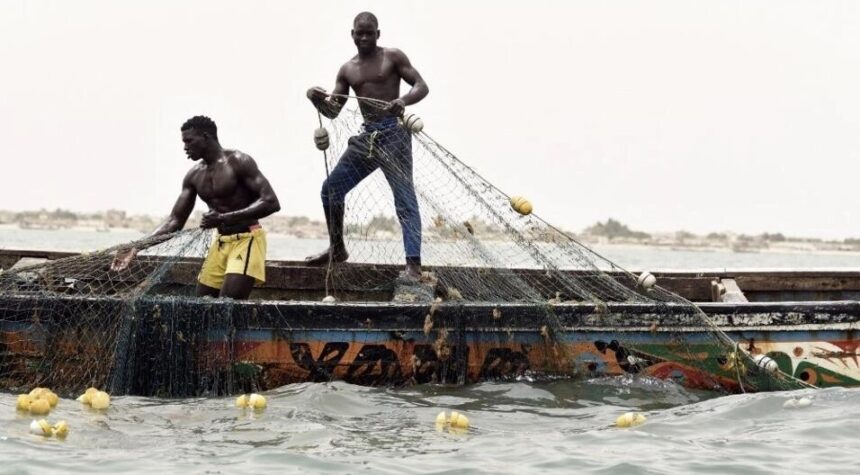
Dakar, Senegal – Senegal’s fishing communities are facing a crisis as their most cherished catch, the sardinella, vanishes from local waters. This small, flat fish, a staple food and economic driver, is migrating northwards in search of cooler habitats due to climate change, according to a new study.
Amadou Gueye, a weathered fisherman returning to Dakar’s Ouakam port with a meager haul of octopuses after a long, fruitless search, exemplifies the struggle. “There’s no fish,” he laments, blaming both the strong currents and competition from large industrial trawlers.
Ibrahima Ndiaye, vice-president of the local fishermen’s committee, confirms the hardship. “Finding sardinella used to be a daily task,” he says. “Now, our pirogues (traditional wooden boats) spend weeks at sea, venturing as far as Guinea-Conakry for a catch.”
The culprit behind this northward shift, scientists say, is a phenomenon called “tropicalisation of ecosystems.” Rising sea temperatures are altering the coastal waters of northwest Africa, pushing fish like sardinella out of their traditional habitats.
A recent study published in Scientific Reports reveals a startling migration rate – 181 kilometers per decade. Researchers from Senegal, France, and other West African nations analyzed data from trawlers and acoustic surveys, painting a clear picture of this climate-driven exodus.
The study warns that over three decades of ocean warming have disrupted the cold Canary Current, a vital regulator of the marine ecosystem and regional climate patterns. This complex interplay of factors, including changes in wind patterns and upwelling (nutrient-rich cold water rising to the surface), is forcing fish populations out of their comfort zones.
“While overfishing is a problem we create,” explains Vincent Rossi, an oceanographer with France’s CNRS research center, “the dramatic environmental impacts are a ripple effect of our actions.”
The loss of sardinella poses a serious threat to food security in West Africa, where the fish is a dietary mainstay. The study also warns that managing shared fish stocks across borders will become increasingly challenging as these populations migrate.


