




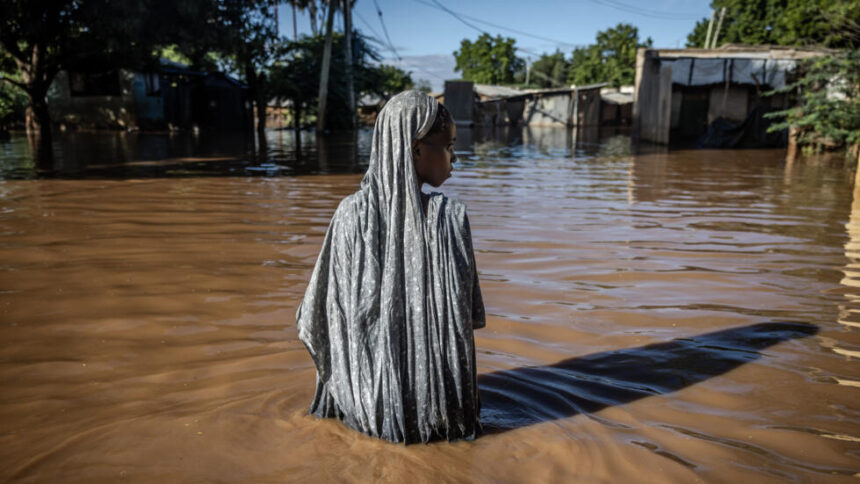
A recent study by the World Weather Attribution group (WWA) reveals a surprising truth: El Nino, a weather pattern typically associated with East Africa’s heavy rainfall, was not responsible for the devastating floods earlier this year.
The relentless downpours that claimed over 500 lives and displaced hundreds of thousands across Kenya, Tanzania, and neighboring countries were fueled by a different force – climate change.
While the Indian Ocean Dipole (IOD) likely played a role in last year’s floods, WWA scientists found no such influence from El Nino on the 2024 deluge.
Using advanced weather data and climate models, the study suggests climate change has significantly increased the likelihood and intensity of extreme rainfall events in the region.
The findings estimate that climate change doubled the probability of these floods and boosted their intensity by 5%. However, the study acknowledges a degree of uncertainty in these calculations.
The WWA study focused on the peak 30-day rainfall period during the monsoon season. Their grim conclusion: heavy rainfall events in East Africa are expected to worsen with further global warming.
The study urges governments in the region to prioritize infrastructure improvements and ecosystem protection, crucial steps to safeguard lives and bolster resilience against climate disasters, particularly in densely populated areas.
East Africa and the Horn of Africa are particularly vulnerable to climate change despite contributing minimally to global carbon emissions. Just last year, over 300 people perished in floods across the region, following the worst drought in four decades.
The WWA emphasizes the need for urgent action on climate change mitigation.


 reveals a surprising truth: El Nino, a weather pattern typically associated with East Africa's heavy rainfall, was not responsible for the devastating floods earlier this year.)