




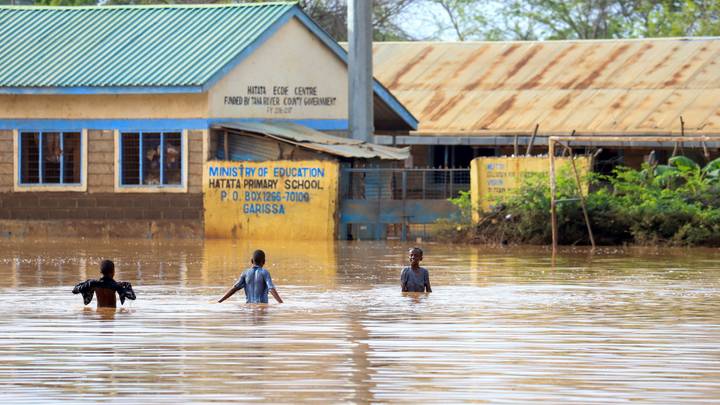
Schools in Kenya have reopened their doors after facing the wrath of deadly floods that wreaked havoc across the nation, claiming the lives of over 260 individuals. Despite the persistent challenges posed by the floods, most public schools in Kenya resumed classes on Monday, May 13, following two previous postponements.
The Kenya National Union of Primary Teachers (KNUT) has urged authorities to adopt a case-by-case strategy in reopening schools, stressing the adverse impact of the floods on the structural integrity of educational buildings. The aftermath of the floods has seen an overwhelming number of displaced individuals, with over 150,000 people seeking refuge in camps scattered throughout the country.
Concerns loom large among parents regarding the safety of their children amidst apprehensions surrounding the condition of learning facilities affected by the floods. Education Cabinet Secretary Ezekiel Machogu has indicated that while 95 percent of schools are deemed ready to commence the second term, attention is being directed towards assessing the situation in learning institutions located in seven counties to ensure the safety of students.
Machogu underscored that the decision to reopen schools aligns with guidance from the Kenya Meteorological Department, which has signaled a decline in the prolonged heavy rains that have besieged the region.
However, echoing the concerns of many, the Kenya National Union of Primary Teachers (KNUT) has advocated for a cautious approach to reopening both primary and secondary schools for the second term, citing lingering risks posed by flooding.
Meanwhile, amidst the chaos caused by the floods, some displaced individuals have sought shelter in schools, prompting government efforts to swiftly relocate them to designated camps. The government has issued directives for residents living in proximity to 178 dams and reservoirs, which are either at full capacity or nearing it, to evacuate immediately or face forced relocation.
Of particular concern are the escalating water levels at two major hydroelectric dams, which have surpassed historical records. Authorities have issued warnings to communities residing downstream along the Tana River, which recently witnessed a tragic incident when a boat capsized, claiming seven lives with 13 individuals still reported missing. Just last month, a passenger bus was swept away from a bridge along the same river.


