




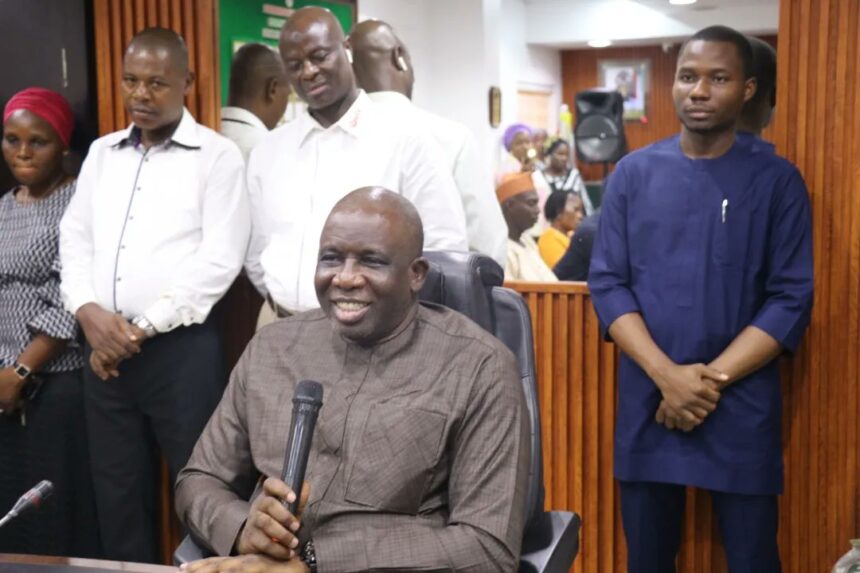

Lagos State is taking a big step towards boosting its internally generated revenue by equipping its civil servants with a new property tax application. The Lagos State Ministry of Finance recently held a training program for its staff on the Lagos Automated Property Tax System (LAPTS), aiming to improve efficiency and increase land use charge collection.
“Technology is the key to making work faster, accurate, and seamless,” said Mr. Hundogan Temitope, Permanent Secretary of the Ministry of Finance. He emphasized the importance of LAPTS in identifying properties, verifying their usage for accurate charge assessment, and even capturing photos to streamline dispute resolution.
While acknowledging progress in land use charge collection, Temitope stressed the need for a significant leap forward. “Our current growth is incremental, but we’re aiming for exponential improvement,” he declared.
The training program, facilitated by Detamainingu Limited, underscores the government’s commitment to maximizing its revenue potential. Temitope highlighted the significant growth in Lagos’ internally generated revenue, rising from N600 million in 2001 to around N100 billion currently. However, he pointed out that the potential is much larger, with estimates suggesting a possible N1 trillion in revenue if all factors are optimized.
“We can’t keep doing the same things and expect different results,” Temitope stated. “LAPTS is crucial for achieving our revenue targets and simplifying our operations.”
The application offers a range of benefits beyond just streamlined bill delivery. As Mr. Ladigbolu Ayodeji, General Manager of Detamainingu Limited, explained, LAPTS will capture and record property coordinates, generate data for analysis, and even track customer retention for improved collection efforts.
Project Manager for Detamainingu and Technical Adviser on Land Use Charge, Mrs. Adenike Jolasimi, further elaborated on LAPTS’ potential to enhance revenue analysis. The application can identify residents with outstanding payments, allowing the Ministry of Finance to make data-driven decisions for optimized revenue collection.