

China’s increasing military presence in the Gulf of Guinea reflects the country’s strategic focus on securing vital trade routes and protecting its growing investments in the region. Known for its rich oil reserves and frequent piracy attacks, the Gulf of Guinea has become a key area for Chinese naval engagement.
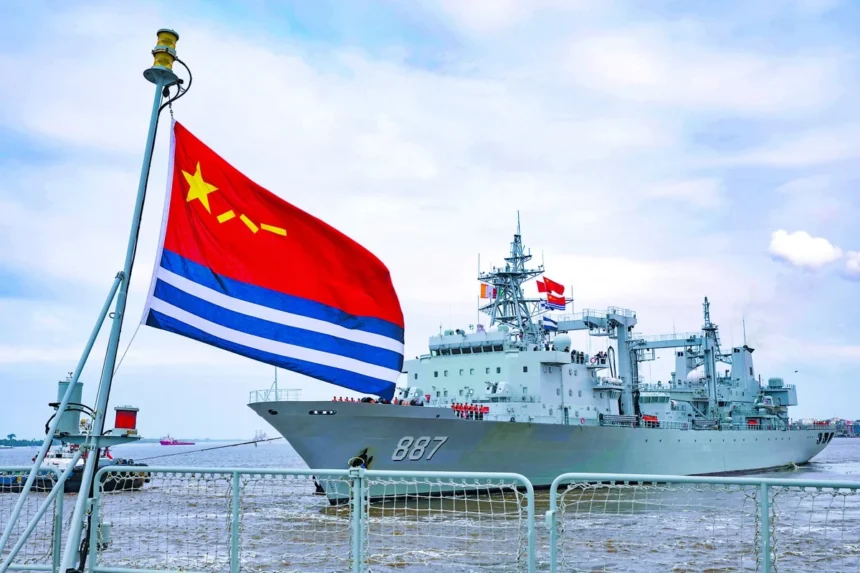
In July 2022, a Chinese naval group including the destroyer Nanning, frigate Sanya, and supply ship Weishanhu visited five countries along the Gulf’s Atlantic coastline. During their stop in Gabon, Chinese sailors assisted the Gabonese navy with repairs and trained local forces in anti-piracy, anti-terrorism, and rescue operations. This visit was part of a broader effort to strengthen China’s military cooperation with Gulf nations.
The Gulf of Guinea, stretching over 5,700 kilometers from Senegal to Angola, is an important maritime zone for China’s commercial activities, particularly in oil and fisheries. However, the region has long struggled with piracy, which threatens the safety of Chinese ships and citizens. Chinese fishing vessels and oil tankers have been hijacked in recent years, with incidents reported in April and July 2023.
Paul Nantulya, an expert at the National Defence University’s Africa Center for Strategic Studies, explained that China views Africa as a testing ground for expanding its naval capabilities. As piracy continues to disrupt shipping in the region, Beijing’s military presence is positioned to both protect Chinese interests and enhance the operational reach of its naval forces.
In response to growing security concerns, several Gulf of Guinea nations, including Nigeria and Sierra Leone, have received Chinese patrol boats to combat piracy and illegal fishing. Furthermore, Equatorial Guinea has entered negotiations with Chinese companies to strengthen its naval defenses against maritime threats.
China’s security involvement also includes the expansion of joint naval exercises and peacekeeping efforts in the region. A recent two-day forum in Shanghai brought together military officials from 18 Gulf of Guinea countries to discuss strategies for addressing piracy and illegal fishing.