




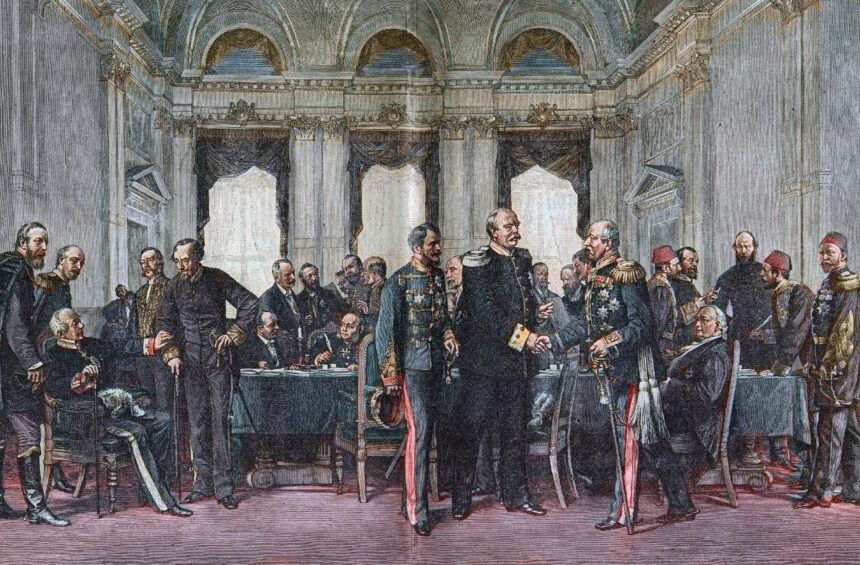
Berlin, Germany – A century and a half after European powers carved up the African continent, a group of activists, artists, and academics convened in Berlin to confront the enduring legacy of colonialism. The event, organized by the German cultural project Dekoloniale, marked the 140th anniversary of the infamous Berlin Conference of 1884.
The conference, held at the European Commission’s headquarters in Berlin, brought together experts from Africa and the global diaspora to discuss the far-reaching consequences of the 1884 gathering. During this historic meeting, European leaders, including those from Portugal, Britain, and Germany, negotiated and divided African territories, disregarding cultural and linguistic boundaries.
“What happened here in Berlin was not just an act of territorial rearrangement, it was an act of violence, one that echoes throughout generations,” said Bell Ribeiro-Addy, a British Labour lawmaker of Ghanaian descent. She emphasized that the conference was about power, exploitation, and the plunder of African resources.
Honoured to speak at the Dekoloniale Berlin Africa Conference today.
140 years after European nations carved up Africa, we came together to call on European leaders to make reparations for the ongoing damage that has been inflicted on the continent and global diaspora. pic.twitter.com/OYRMwWH7KP
— Bell Ribeiro-Addy MP (@BellRibeiroAddy) November 15, 2024Finnish-Nigerian author Minna Salami, a participant in the event, highlighted the devastating impact of the Berlin Conference on Africa. She cited poverty, conflict, corruption, and trauma as direct consequences of the colonial era.
Michaela Moua, the European Commission’s first-ever coordinator on anti-racism, underscored the importance of confronting the past to understand present-day racism. “These are painful truths,” she acknowledged.
As the event concluded, some participants called for reparations for colonialism and slavery, demanding that European nations return what they had stolen. Moua, however, clarified that reparations were not the responsibility of the European Commission but rather a matter for individual member states to address.


