




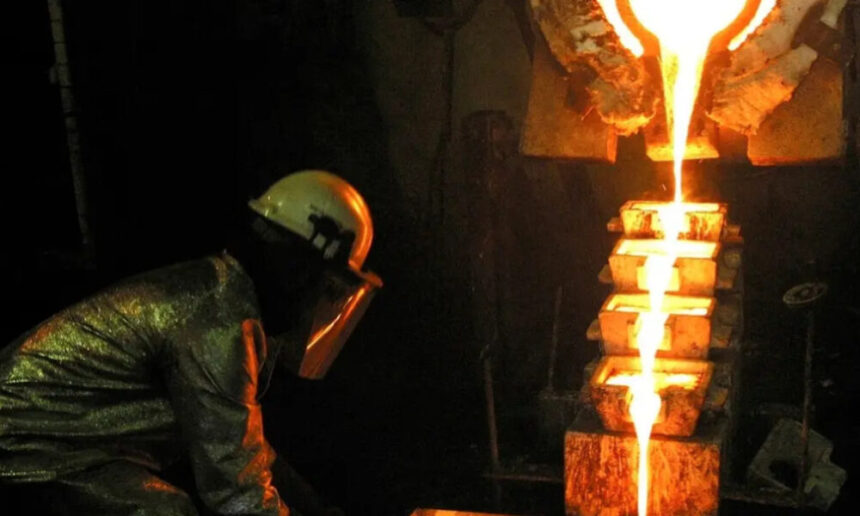
Accra, Ghana – Africa’s leading gold producer, Ghana, has marked a significant milestone with the opening of its first commercial gold refinery in the capital, Accra. The new facility, Royal Ghana Gold Refinery, is poised to transform the country’s mining landscape by adding value to the precious metal and boosting national earnings.
For centuries, Ghana has been a major player in gold mining, but until now, the raw metal has been exported without undergoing refinement within its borders. The refinery, with a daily processing capacity of 400 kilograms, aims to change this by processing gold dore from small-scale and artisanal miners. It is a joint venture between India’s Rosy Royal Minerals and the Ghana Central Bank, which holds a 20% stake.
Vice President Mahamudu Bawumia hailed the refinery’s opening as the dawn of a new era for Ghana’s gold industry. He emphasized that the facility will not only help curb gold smuggling but also generate substantial revenue for the nation. By refining gold locally, Ghana can command higher prices for its product, keeping more of the economic value within its borders.
The refinery is expected to create employment opportunities, with 80 to 120 direct jobs and an additional 500 indirect positions. This development is particularly significant as Ghana prepares for presidential elections in December.
Ghana’s gold production has been on the rise, driven primarily by increased output from small-scale and artisanal miners. The country solidified its position as Africa’s largest gold producer last year, with production reaching 4.03 million ounces. With projections of between 4.3 million and 4.5 million ounces for 2024, Ghana is well on track to surpass its gold production target.
To bolster its gold reserves and stabilize the cedi currency, the Bank of Ghana initiated a gold purchase program in 2021. The program has yielded impressive results, with total purchases amounting to 65.4 tonnes, valued at $5 billion. The central bank is now focused on securing London Bullion Market Association (LBMA) certification for the new refinery, a crucial step in diversifying its foreign exchange reserves and reducing reliance on external borrowing.
While the refinery holds the promise of significant benefits for Ghana, small-scale gold miners have expressed concerns about pricing and transparency. Godwin Armah, general secretary of the small-scale gold miners association, stressed the importance of fair dealings to build trust and support among miners.


