

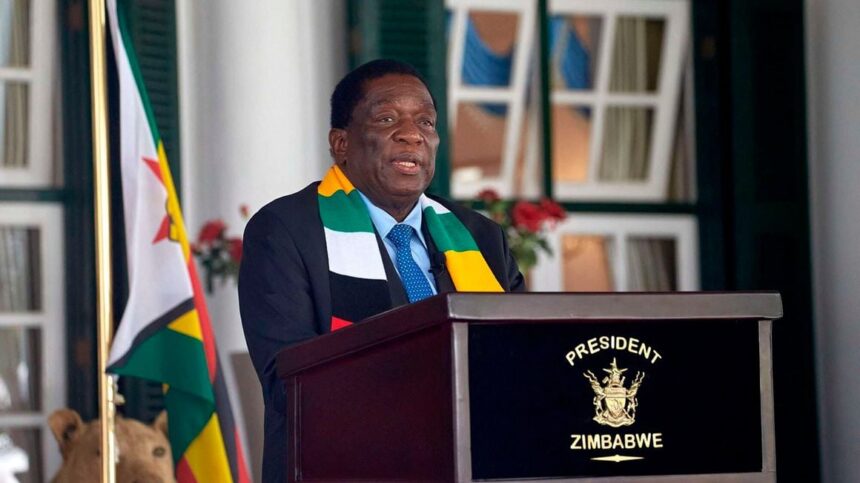
Zimbabwe’s debt has risen by 1.7 percent in less than a year, reaching $18 billion, complicating ongoing negotiations with multilateral lenders who demand more reforms from President Emmerson Mnangagwa’s government. This increase from $17.7 billion in September 2023 adds to the country’s mounting financial woes.
The latest government statistics have sparked concern among debt justice advocates, suggesting that the total public and publicly guaranteed debt will rise further as it undergoes validation. Included in this increase are $1.9 billion for recapitalizing the sovereign wealth fund and $1.2 billion from the central bank.
Critics, including the Zimbabwe Coalition on Debt and Development (Zimcodd), have condemned the lack of transparency in Zimbabwe’s foreign borrowing. Zimcodd highlighted inconsistencies in debt figures shared with creditors, which range from $19.2 billion to $21.9 billion, complicating efforts to accurately assess the debt crisis.
China has been a significant source of Zimbabwe’s external debt, as the country is barred from accessing loans from the World Bank and IMF due to past defaults. Since the ouster of longtime president Robert Mugabe, Zimbabwe has struggled to reach debt restructuring agreements. The process, led by former Mozambican president Joachim Chissano and African Development Bank (AfDB) president Akinwumi Adesina, faces uncertainty following the US withdrawal of support over Zimbabwe’s lack of reforms.
The debt crisis threatens the stability of Zimbabwe’s new currency, the Zimbabwe Gold (ZiG), and the broader economy. Zimcodd warned that rising debt servicing costs could destabilize government finances and jeopardize essential public services like education and healthcare. The public debt is already under severe stress, with a large portion consisting of interest and arrears.
US Ambassador Pamela Tremont stated that Washington is pausing its participation in debt relief talks until Zimbabwe demonstrates key reforms, following last year’s disputed re-election of President Mnangagwa. International observers criticized the election process, citing restrictions on opposition parties and logistical failures.
The AfDB has called for robust measures against corruption and improved engagement with the international community as part of Zimbabwe’s arrears clearance program. The bank emphasized that sustainable debt management and macroeconomic stabilization are critical for the country’s recovery.
Earlier this year, China canceled an unspecified amount of Zimbabwe’s interest-free loans, following its 2022 forgiveness of 23 interest-free loans to African countries. Analysts viewed this as a strategic move to counter accusations of “debt-trap diplomacy.”
Zimbabwe has leveraged its mineral resources to secure significant loans from China for infrastructure projects. Last year, it secured a $400 million loan from Afreximbank, to be repaid with 38 percent of export proceeds from its largest platinum miner. Previously, the country borrowed $200 million from China, secured by 26 million ounces of platinum reserves.