




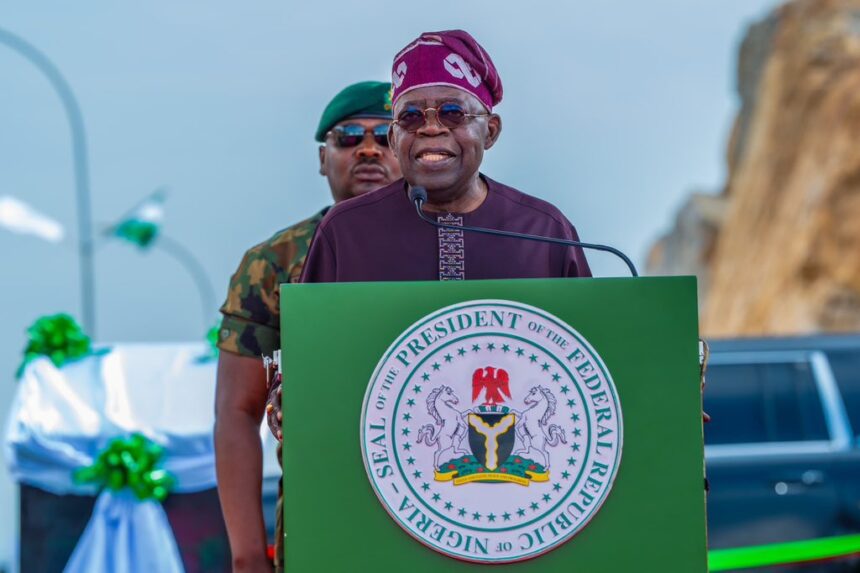
ABUJA, June 12 – President Bola Tinubu of Nigeria announced on Wednesday that the country will persist with its economic reforms despite rising hardships and public discontent. Tinubu also committed to presenting an executive bill to parliament soon to establish a new minimum wage.
Taking office a year ago, Tinubu abolished a longstanding petrol subsidy that kept fuel prices low and devalued the national currency, actions which have led to inflation soaring to 33.69% in April—the highest in nearly 30 years. This surge has significantly eroded incomes. In a Democracy Day television address, Tinubu acknowledged the difficulties caused by these reforms, which include higher interest rates and the partial removal of electricity subsidies. He asserted, however, that these measures would lay a stronger foundation for future growth.
“Our economy has been in desperate need of reform for decades. It has been unbalanced because it was built on the flawed foundation of over-reliance on revenues from the exploitation of oil,” Tinubu stated. “As we continue to reform the economy, I shall always listen to the people and will never turn my back on you.”
Nigeria is currently facing its most severe cost-of-living crisis in decades. Last week, labor unions suspended a strike intended to pressure the government into agreeing to a new monthly minimum wage. The government has proposed doubling the minimum wage to 62,000 naira ($41.89) per month, while labor unions are demanding 250,000 naira. Tinubu affirmed that his administration has negotiated in good faith and will soon submit an executive bill to the National Assembly to formalize the agreed-upon wage.
“We shall soon send an executive bill to the National Assembly to enshrine what has been agreed upon as part of our law for the next five years or less,” Tinubu said. He did not specify whether the bill would reflect the government’s proposed minimum wage or a different figure.


