




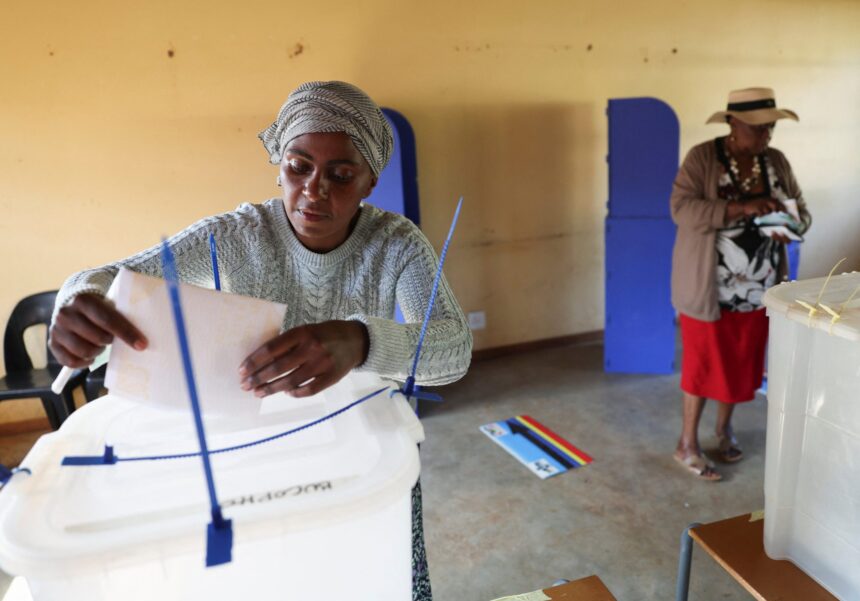
Voters in Eswatini, Africa’s last absolute monarchy, queued under the hot sun on Friday morning to cast their ballots in parliamentary elections whose outcome is likely to make little difference to the country’s political landscape.
King Mswati III, who has ruled Eswatini since 1986, has consistently evaded calls for meaningful reforms that would nudge the country in the direction of democracy. Political parties are banned, and the power of the politicians elected in these polls consists mainly of being able to make suggestions to the king, who is free to ignore them.
Campaigners say the election will be dominated by monarchists and other candidates sympathetic to the ruler. Two members of the previous parliament who supported the pro-democracy movement were jailed, and a third fled the country.
Some Swazis nonetheless hoped their vote would make a difference. One voter said she cast her vote in hopes that her candidate will assist her community with transport so they would be able to go to church.
Mswati’s opponents also say he uses public money to fund a lavish lifestyle which he shares with his 15 wives, while most of the country’s population is made up of struggling subsistence farmers.
Eswatini is rated “Not Free” by the U.S.-based organisation Freedom House. The South African Development Community (SADC) has sent an electoral observation mission to Eswatini at the kingdom’s invitation.

