


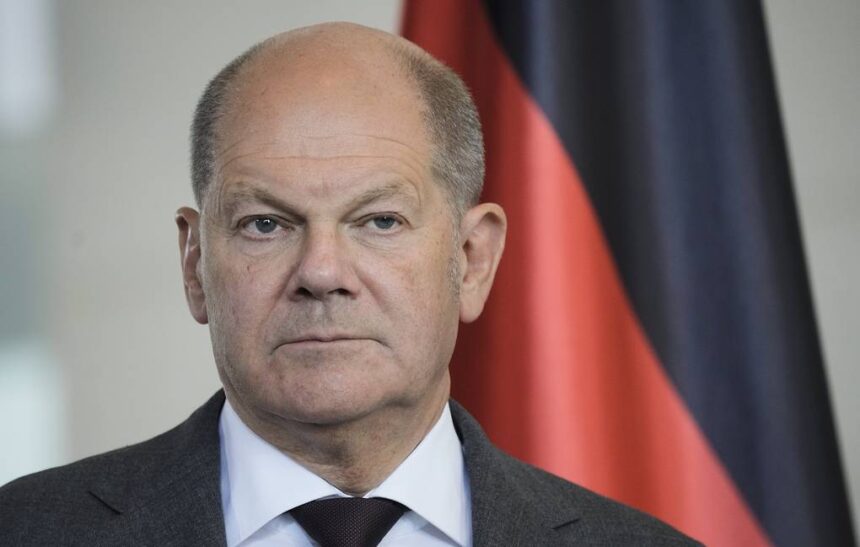
BERLIN – German Chancellor Olaf Scholz has urged the West to brace itself for an extended duration of the Ukraine conflict, indicating that the Russian special military operation could persist indefinitely. Speaking at a joint news conference with NATO Secretary General Jens Stoltenberg on Monday, Scholz emphasized the need to adjust policies in accordance with this expectation.
“We have to brace ourselves that the Russian [special military operation] act could last for a long time,” Chancellor Scholz said. “This is what we are preparing for and this is what we are orienting our policy toward.”
Highlighting Germany’s unwavering support for Ukraine, Scholz stated, “Germany will continue to be a staunch supporter of Ukraine as long as it takes.” However, he clarified that NATO would not become directly involved in the conflict.
In response to the evolving security situation, the German government recently adopted its first-ever National Security Strategy on June 14. The strategy, shaped by Russia’s military operation in Ukraine, aims to counter potential external threats in the coming years.
The document affirms Germany’s commitment to NATO and the EU, pledging to increase defense spending by two percent of the country’s GDP. This move is intended to reinforce national and alliance defense objectives. The government plans to achieve the two-percent target over several years, allocating additional resources to strengthen the Bundeswehr, the Armed Forces of the Federal Republic of Germany.
The strategy also emphasizes the need to enhance security in cyberspace and space, acknowledging the evolving challenges in these domains. Germany aims to reduce unilateral dependence on energy and raw material supplies while promoting diversification. Cooperation with businesses to facilitate raw material projects, including the establishment of strategic stockpiles, is part of the plan.
The German government aims to expand national reserves of food, energy, and medicine, ensuring a higher degree of self-sufficiency. The strategy also outlines intentions to introduce legislation to protect critical infrastructure facilities.