

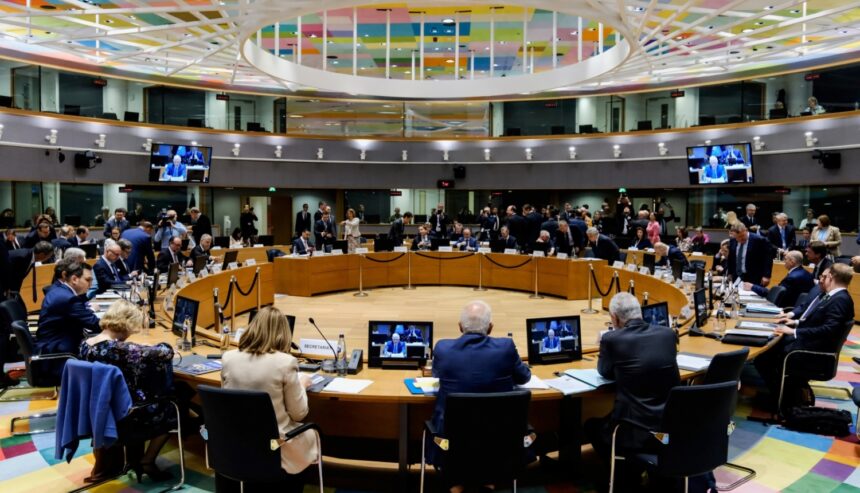
Brussels, 22 May 2023 – Edgars Rinkēvičs, the Minister of Foreign Affairs of Latvia, made a compelling case for increased military support to Ukraine during the meeting of the Foreign Affairs Council of the European Union held in Brussels. The council convened to discuss pressing issues such as the Russian aggression against Ukraine, the situation in the Horn of Africa, and developments in the Western Balkans.
In his address, Minister Rinkēvičs emphasized the critical importance of providing military assistance to the Ukrainian armed forces in their fight against Russia’s armed aggression. He asserted that the EU must promptly meet Ukraine’s military needs on a wide scale and for the long term. Latvia stood firmly behind this position and supported the proposal to raise the European Peace Facility’s overall financial ceiling by 3.5 billion euros. Rinkēvičs also stressed that the European Peace Facility should continue functioning as a global tool, aiding not only Ukraine but also other regions, including African countries.
Regarding the EU Military Assistance Mission in support of Ukraine (EUMAM Ukraine), Minister Rinkēvičs underscored the necessity of aligning its funding with the mission’s overall ambition. He advocated for the provision of required military equipment to the Ukrainian armed forces following the completion of training for Ukrainian military personnel. This step would ensure that Ukraine is adequately equipped to address security challenges effectively.
The discussion on sanctions against Russia saw Minister Rinkēvičs urging the swift adoption of the 11th sanctions package. He also emphasized the need for stronger measures to counter attempts at circumventing sanctions. The minister highlighted the risks associated with trade through third countries and stressed that the EU must send a resolute message to these nations, firmly stating that the circumvention of sanctions would not be tolerated.
Additionally, Minister Rinkēvičs called for immediate action on new sanctions against Belarus and urged an agreement on sanctioning those individuals who bear responsibility for the persecution of opposition politician, journalist, author, and historian Vladimir Kara-Murza. It is crucial for the EU to take a decisive stance against such violations and hold accountable those involved.
Within the framework of the Foreign Affairs Council, Minister Rinkēvičs also participated in a meeting of the Foreign Ministers of the Baltic States and Poland. The meeting focused on regional security concerns and included discussions on preparations for the upcoming NATO summit in Vilnius.
As tensions continue to escalate in Ukraine and the wider region, the calls made by Minister Rinkēvičs highlight the urgent need for unified action and support from the European Union. The Foreign Affairs Council meeting served as a platform to strengthen cooperation and devise effective strategies to address the multifaceted challenges faced by Ukraine and its neighboring countries. The decisions taken during this meeting will shape the EU’s response and determine the level of support provided to the affected regions.